30 Things You Can Do To Save Wildlife

Updated: May 17
We can save what’s left of the wildlife on Earth with our personal consumer choices.
Julie Smith, 5/7/26
This is a summary of Chapter 11, Can We Save What's Left?, in the book, “2050: What’s it Gonna Be?”. You can download the full chapter, as well as other chapters. References are here.
If the past 50 years of actual experience and complete lack of results has taught us anything, it’s that we obviously need to completely change our ways, forever, to save our wildlife, our planet, and humanity. We’re going to have to make some tough decisions, and some potentially difficult choices at the personal level with some sacrifices, compared to what we’re used to. When I say “what we’re used to” that’s exactly what I mean. We’re going to have to change, but the changes don’t have to be bad, just different.
In order to make the kinds of big changes that are desperately needed, we need to care deeply about the issues that underlie the needed changes. Big changes are usually not convenient, and require quite a bit of planning and extra work. For example, making a big move to another home or state or even another country isn’t easy, and it takes a lot of commitment and work to do it.
I truly care about our planet and our wildlife, and have been making changes gradually over the past few decades to reduce my carbon footprint and by extension my impact on wildlife. Back when I started, I cared because I saw the crisis coming, and wanted to do all I could to mitigate my personal impact. I even changed careers and left the oilfield service company that my father founded, and took a pay cut to do so. All these years I have done my best to influence others to do the same, and have been fascinated by the avoidance of the truth and the resistance to change, and have been asked more than once to stand down, with either body language or rolled eyes or just someone that I’m talking to either walking away or changing the subject.
It seems to me like everybody is walking around like zombies, focusing on nitpicky things that are not nearly as important as saving our planet. Like they had to park 500 feet from the entrance to the Costco because all the nearby spots were taken by the other Big Corp loser shoppers, or the store stopped discounting the pop, or they ran out of bottled water OMG. The reality about how bad it really is for truly important things, like our entire freaking planet and the entire web of life that every single one of us, Big Corp Shopper and Hippie alike, absolutely can’t survive without, just doesn’t seem to drive much urgency. My take is that this is driven by the influence of Big Corp, that wants us to keep cranking away on irresponsible purchases until everything is spent. Think about that. On TV, how many of the advertisements are for crap we either don’t really need or that are bad for our health? How many are for actions that we can make that would actually help the planet and wildlife, or at least bring attention to the problems?
To truly care, we have to understand the actual emergency crisis that our planet is in, and we have to be literally horrified. I can tell you I am. We’re down to less than 10 years before our carbon emissions are going to push our planet past a tipping point, from which we’re not going to be able to return. If we allow this to happen, when we have the knowledge and we don’t really have to do very much to reverse this, that would be absolutely absurd. Just beyond idiocracy. I have no idea why some people wake up to this extremely serious problem that should be an absolute priority for everyone on the planet, while most just don’t. I simply ask you to care now, if you don’t already. PLEASE PLEASE PLEASE care enough to change. We can’t undo the past, but we can change the future. We have all contributed to the decimation of our wildlife, and we all have the ability to help it recover, for the sake of our planet.
In 2015, Paul Erlich, president of the Center for Conservation Biology at Stanford University, coauthored a paper in Science Advances that established, using very conservative assumptions, that the sixth mass extinction has officially arrived. This means we are likely at the dawning of a lonely era in which 75% of species will perish from the Earth. He likens saving of species through cloning, like they’re trying to do with the black-footed ferret, to anticipating a flood and planning to bail with a thimble. Funding should go toward addressing the root causes of the conservation crisis, such as population growth and climate change. “Screwing around with science to save a white rhino might be fun, and I would like to see it preserved and am all for biodiversity, but it’s so far down the list of things we should be doing first.”
You can always donate your ass off. Save those whales! Save the Pandas! Save the Penguins. The monarch butterfly. The great apes. The Tasmanian devil. It will probably make you feel a little better for a little while, and it might help a little bit for a little while, but at the end of the day the only true way of saving our wildlife is to drastically cut our carbon footprint and reduce human population, and give the wildlife their space and leave them alone.
Global Warming – Our CO2 emissions from the use of fossil fuels is a huge driver of wildlife loss, and if there’s anything we can each do immediately, it’s cut our carbon footprint. We need to cut by at least 50% by 2030 globally in order to stay within the temperature limit determined through intensive scientific analysis to avoid hitting a global warming tipping point, from which there is no return. Global warming is the biggest issue we have by far. If we don’t get this right, the other efforts won’t save us. By the way, in developed countries like the U.S., where we’re using even more carbon per capita, about 4 times the global average, we need to cut our carbon footprint by even more. By a lot. More like 80%. And, again, it’s not that hard. A lot of our usage is simply waste that we need to be conscious about.
I offer 30 things you can do to save wildlife on our planet with your own individual choices.
Get off the internet. Go outside and take a walk. The data centers are currently 2% of our electricity, and the lion’s share of this by far is gaming.
Phantom energy alone is 8% of our electricity. That’s just energy for appliances that are on but that we’re not even using. What a waste!
Don’t leave bathroom fans running for more than a few minutes if you're heating or cooling the air in your home.
Likewise, don't leave doors and windows open if you're heating or cooling the air inside.
Do you have those bathroom fixtures with multiple light bulbs in them? Do you really need all that light in order to take a shit? How about removing a couple of the bulbs?
Don't leave outdoor lights on all night long. Put them on motion sensors.
Same for indoor lights at night.
Don’t buy crap you don’t need, there’s a footprint associated with everything. Do you really need that new outfit? Textiles are one of our biggest things. The best way to buy clothes these days is from thrift stores. You pay a lot less and there’s no additional carbon footprint in making it.
Get over buying the biggest house you can afford to hell and gone, then driving a hour each way to get to work. That’s just stupid. You’re paying more for gas, and for heating and cooling the house, plus all that frustrating tedious time sitting behind the wheel. It’s so much healthier with a lower footprint to live a reasonable distance from where you work in a smaller home.
Don’t buy stupid useless crap like snow blowers and leaf blowers, loud obnoxious machines that fill the world with noise, try a shovel or a rake or a broom.
Human population growth absolutely must stop, and then decrease, by around 30% in the next few decades. We've grossly overrun our planet and need to knock it off.
Only buy organic food. Every time I mention organic people say they can’t afford it. Well, the problem is that we can’t afford not to. We’ve backed ourselves into a corner when we can’t afford to feed ourselves without poisoning the environment, and the other life, as well as humans, who live here. The planet and wildlife can’t afford continued toxic agriculture.
Make Responsible Grocery Choices, since this is our biggest daily consumption. After all, we have to eat, don’t we? Buy local groceries that don’t consume energy in transportation, that is produced responsibly, with as little processing and packaging as possible. In summer, shop at the local farmer’s market. When we consume highly processed food, not only is more energy used to produce it and package it, it is stripped down of nutrients that we actually need, is not good for us, and consumes more land in its production. Examples are beef, dairy, and anything with refined sugar in it, which consumes enormous amounts of land, corn and other grains for feed, and is overconsumed by Americans, leading to health problems which in turn leads to higher carbon footprint. Basically we are killing wildlife and our planet as we trash our bodies with lousy diets. Seriously.
Say No to Toxins – Most of these are petrochemicals that pollute the environment in their production and in their final use, after which they typically go down the drain to the local wastewater treatment plant, and from there either untreated or partially treated to the nearest receiving water body. Once there, they poison the aquatic and terrestrial wildlife that depends on that water to survive. Are you fine with letting your child drink this muck? Your dog? Then why would you be fine with letting the wildlife drink it and swim in it?
These toxins are mainly found in commercial personal care and home cleaning products.
Avoid Single-Use Containers – especially plastic and for crike sake don’t litter. If you just couldn’t live without that toxic Coke in a plastic bottle, then you can damn well at least bother to recycle it.
Reserve 50% of Oceans for wildlife and stop eating seafood. This would let their populations recover, which actually shouldn’t take very long. Personally, I’m avoiding ocean fish for the most part, I google to see if it’s endangered, and if so, I won’t do it. And every time I check, it’s endangered. As much as I love salmon and crab and cod fish. Maybe once per year at most for a privilege that I probably don’t deserve. What little fish I eat is fresh water or farmed. What if we all did that? If an additional 37% of the oceans were conserved as Marine Protected Areas, in addition to the measly 13%we have now, I might even be able to consume some damn fish and chips once in a while, with a relatively clear conscience to boot! And so could you.
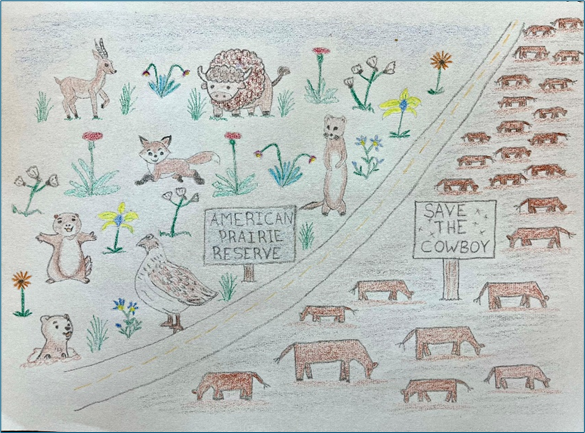
Reserve 50% of Land for Wildlife - President Biden committed to 30% in 2021 when he assumed the Presidency, aligning with the global 30x30 initiative to protect 30% of the world's land and ocean by 2030. This level of protection was agreed upon at the UN Biodiversity Conference COP15 in Montreal in 2016. The initiative is also known as the Paris Agreement for Biodiversity.
Say no to beef and dairy unless it's grass-fed certified. This will go a long way towards getting rid of cattle grazing on U.S. western public lands that should be set aside for wildlife. This gives western land back to wildlife and eliminates the need for Wildlife Services and their murderous agenda of killing wildlife that annoys ranchers, and relocates ranchers that are freeloading on the American public by grazing cattle on public lands. Why should we lose the carbon sinks of our western lands and all its wildlife so a few ranchers can live the life they love? We’re all going to lose the life we love if they don’t change. Is that fair?
Vote for the Planet. The Trump administration is an example of how unpredictable government regimes can be, and why we need to depend on our own collective choices, because in the end our choices are what drive change. If we don’t want yet more species driven to extinction, driving our diversity on this planet ever downward, we need to use less fossil fuels, also vote for representatives that represent the actual needs of the people and environmental interests of this planet and not just a few greedy big corp and oil executives who funded their campaigns. In other words, vote left, not right.
Keep Beef and Dairy to Less than 5% in your diet. This isn’t that hard, saves a ton of money in groceries, and is healthier by a long shot than the astronomic portions we consume now. This would make a huge difference in land and CO2 emissions, as well as in your quality of life, especially as you age. You’ll be a lot less likely to need expensive big pharm last-minute save-the-day drugs to keep you alive just a little bit longer as you wither away in pathetic misery, all because you ate too much beef and dairy. And helped kill off our wildlife at the same time. Think about that.
Don’t Buy Exotic Animal Products like animals killed for their shells, tusks and pelts. Don’t buy anything made with ivory, tortoise shells, coral, reptile skins or pelts. Don’t buy products that are harvested from the wild, like exotic food, medicine, and other products. Seriously, do we really need that ivory carving to be happy in life? What are we going to do with it anyway? Set it on a shelf somewhere? Covet it like some weirdo every day? Show it off? Really? Think about that every time you consider buying a body part from a murdered wild animal.
Create a Native Garden. If you happen to live in a house with a flat green lawn, lose it. Even if you live in an apartment or multifamily home, push to get rid of it. Native grasses and landscapes are so much more beautiful and welcoming to wildlife. There are several good books out there to get you started. Native yards give land back to wildlife, and if we all did it, it would make a huge difference, particularly for insects and birds that need natives to survive. Think about it. With natives there’s no reason to ever apply poisons, and no time and energy wasted with lawnmowers, so there’s also one less noisy industrial machine in the world. You also get some time back in your life. Don’t you have anything better to do than waste time mowing the lawn? What a joke.
Don’t Harass Wildlife. If you have pets that are predatory, like dogs and cats, take steps to prevent them from harassing wildlife. Dogs should be leashed or contained so they don’t harass wildlife at home, in open spaces or particularly in the woods. Cat owners should take measures to prevent cats from taking birds, like collars with bells to warn birds, or blocking access to nesting sites. If endangered species are known to exist in an area, pets should be kept indoors or in caged areas out of doors. We can also restrict outdoor time to seasons when birds aren’t present, like winter, or when we can be outside with them, to keep an eye on things.
Never go off-road in vehicles of any kind – motorized or bicycles. A lot of wildlife nests on the ground. Snowmobiles harass wildlife, causing them to lose energy they need to get through the winter as they seek to escape the noise.
Don’t kill wildlife just because it may be annoying. If wildlife is going for the garden and outdoor plants, find a way to keep them off without poisoning or killing them. Mesh usually works just fine. Remember they were there first and the mere presence of your yard and garden takes away from theirs, leaving them little choice.
Light pollution. Turn off the lights at night, with few exceptions. Seriously, some light is obviously needed for safety, but look at the lights in high rises and other public buildings, originally intended to mitigate crime, or at least make intrusions more noticeable to law enforcement from the street. Is it really necessary to have lights on all night long? Can’t we use motion detection for that? Wouldn’t it make more sense to have all lights off unless a motion sensor triggers the lights? Wouldn’t it be easier for law enforcement to see that there’s an intruder?
Noise. Be considerate and keep the noise down when out in open spaces where wildlife live. Ski area avalanche bombing can’t be great for those hibernating or awake in winter.
Get Outside. Take a walk. It’s good for us, it helps to make us care about the wildlife and get to know our local wildlife better. Time spent outside is that much less time we’re sitting indoors on the internet sucking energy out of data centers and adding to carbon emissions in the process.
Stay on paths, whether hiking, biking, snowshoeing or skiing. Many forms of wildlife nest and burrow on or below the ground and they don’t need us tromping through their homes and disturbing them any more than necessary.
If you hunt, don't use lead bullets. Copper is a bit more expensive, but well worth it, especially after you spent bank on your gun, truck and all the other hunting accessories. Lead taints the carcasses, so that scavengers get poisoned as they pick through what's left after you've taken your share. By the way, if you use lead, your share will also be tainted, which poisons you, your family and anyone who eats the meat. Grow a clue. Get over it.
It saddens me to know that we humans care so little about the other life on this planet that we can destroy as much wildlife as we have, in so many destructive ways. And, to be clear, I’m not against hunting or fishing, and I’m not a vegetarian. The reality is that we live in a dog eat dog world, and the entire web of life is a predator-prey world. We humans are a part of this world, and, as the top predator, so to speak, we need to eat, too. We technically fall into the category of omnivores, consumers of plants and meat. All I’m saying is that it feels like we should have a responsibility from our position of power to allow the other life to coexist alongside us, and not to abuse our responsibility as an extremely successful species, to dominate the other life and drive it to extinction.
I’m not sure why I and other like-minded folks care so much more than others. We all have access to the same news and information in this age of split-second global internet, but for some reason the news of wildlife decimation doesn’t seem to spark urgency in very many of us. Which is pathetic, and we had better change our collective attitude very quickly if we want to save the web of life, of which we are an intricate part. Me and Greta Thunberg can’t do it alone. Even if we include Greta’s million followers and my 393 followers. We all have to change our ways, so how do we seriously care enough to bother? What more can I say?


Comments